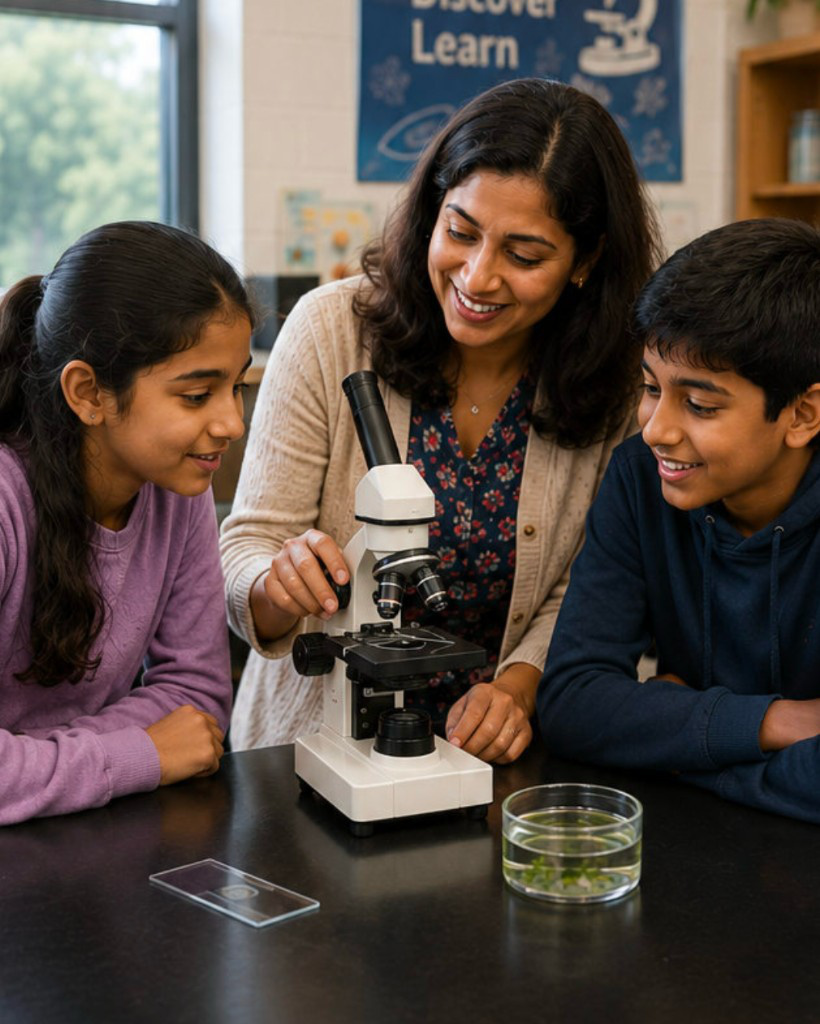
Cover of Tipos de microscopios
Story languageEnglishEspañol
MicrobesMicroscopios simples y compuestos

Tipos de microscopios

By Vaishnavi Renduchintala · Ages 8-15 Free

No reviews yet — be the first!

Maya y Arjun observan una gota de agua de estanque con la Sra. Patel y descubren cómo los microscopios simples y compuestos ayudan a ver un mundo diminuto de microorganismos invisible a simple vista.

Spanish version coming soon.

This story is not available in Spanish yet. You can keep reading in English, or check back soon for the Spanish PDF and quiz.

Spanish version coming soon.

This story is not available in Spanish yet. You can keep reading in English, or check back soon for the Spanish PDF and quiz.

English

People who read this book also read

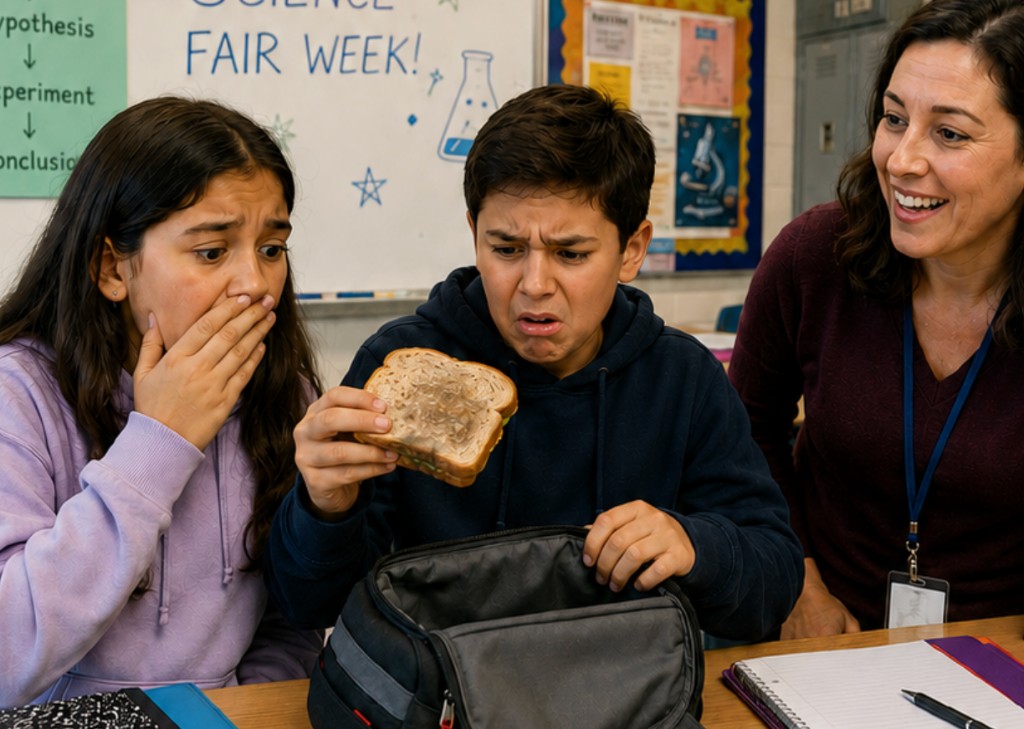
Cover of The Mystery of the Missing Sandwich
MicrobesBacteria

The Mystery of the Missing Sandwich

During Science Fair Week, Lila and Jay discover a forgotten sandwich covered in fuzzy patches. With help from Ms. Rivera and a microscope, they explore the invisible world of bacteria—how these tiny living things grow, why some spoil food, and how we can stay healthy.


By Vaishnavi Renduchintala · Ages 8-15

FreePDFNo reviewsView More
Cover of The Secret Beneath the Roots
MicrobesNitrogen fixation

The Secret Beneath the Roots

In Grandma Rosa's sunny garden, two curious kids pull up a bean plant and discover tiny bumps on its roots—and learn how special bacteria help plants capture nitrogen from the air.

By Vaishnavi Renduchintala · Ages 8-15

FreePDFNo reviewsView More
Cover of The Green Lake Mystery
MicrobesAlgae & Algal Blooms

The Green Lake Mystery

When a neighborhood pond turns bright green, two curious kids and Grandma June discover tiny algae, what causes algal blooms, and why too much algae can harm lake life.

By Vaishnavi Renduchintala · Ages 8-15

FreePDFNo reviewsView More

🔬 Science Element

Un microscopio simple usa una lente (como una lupa). Un microscopio compuesto usa más de una lente para mayor aumento. Las partes clave incluyen el ocular, los objetivos, la platina, las pinzas, la fuente de luz, los tornillos de enfoque grueso y fino, y la base. Los microscopios ayudan a los científicos a estudiar células, microorganismos y otras estructuras diminutas.

Rate this story

Your rating (required)

Reader reviews

No written reviews yet.